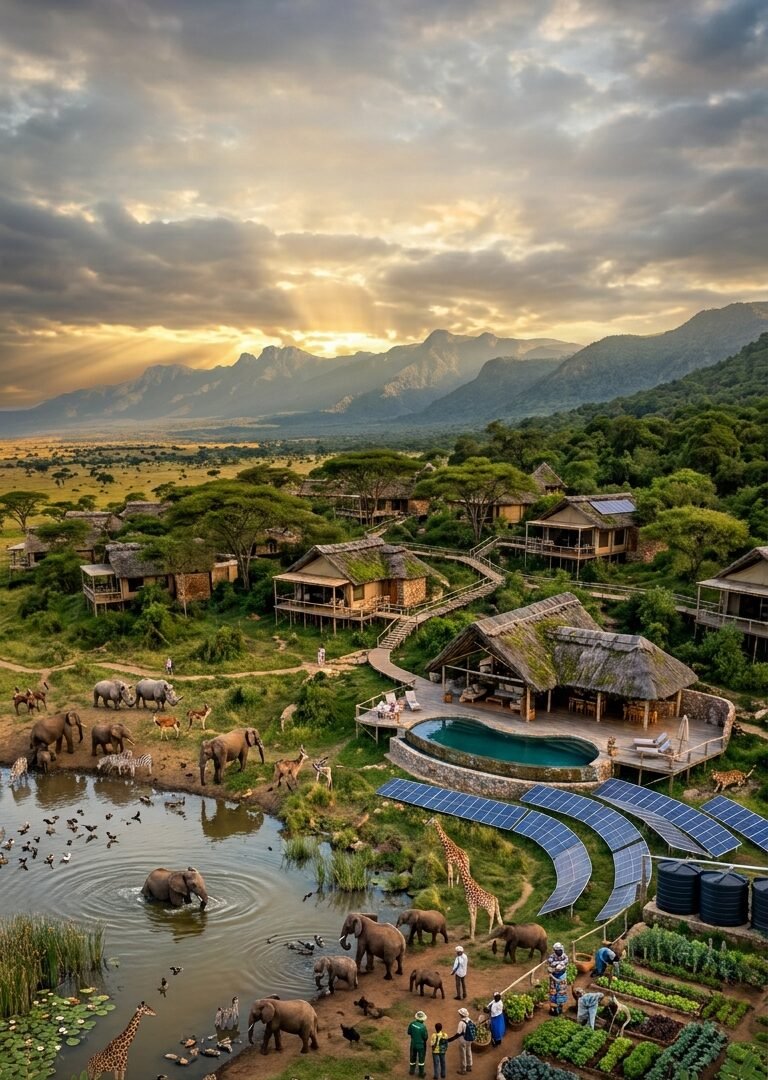
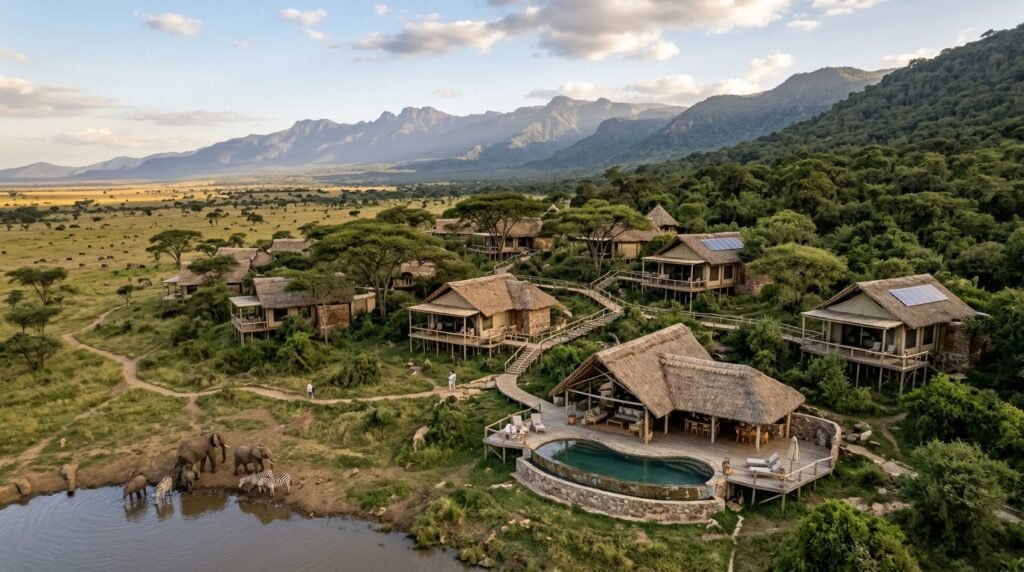
Tourism needs more than growth
Tourism is more than an economic activity. Across Africa, it connects local livelihoods, cultural heritage, natural ecosystems, hospitality businesses and international markets. These connections create opportunities—but they also expose destinations to climate risks, environmental pressures, economic shocks and disruptions to essential services.
The challenge facing Africa’s tourism sector is no longer simply how to make tourism sustainable. It is how to build destinations and businesses that can anticipate change, withstand disruption, adapt to new realities and continue creating value for communities, visitors and the environment.
This is where destination resilience becomes essential.
In 2024, Africa welcomed approximately 73.9 million international tourists and generated US$42.6 billion in international tourism receipts, according to UN Tourism. These figures demonstrate the importance of tourism to the continent’s economy and the value of protecting the natural, cultural and economic assets that sustain it.
Source: UN Tourism — Tourism Investment Trends and Opportunities in Africa.
However, tourism growth alone does not guarantee long-term success. Destinations must also prepare for changing climate conditions, protect ecosystems, strengthen local supply chains and ensure that tourism creates meaningful benefits for the people who live and work there.
For African tourism businesses, resilience is not simply an environmental ambition. It is a strategic approach to protecting operations, strengthening partnerships and supporting long-term destination competitiveness.
1. Why destination resilience matters for African tourism
Africa’s tourism destinations are diverse. Some depend on wildlife and protected landscapes, others on beaches, cultural heritage, urban experiences, food tourism or outdoor recreation. Each has different strengths and vulnerabilities.
A coastal destination may face erosion, rising sea levels or damaging storms. A safari destination may experience drought, water shortages or changes in wildlife distribution. A city destination may be affected by transport disruptions, extreme heat or interruptions to essential services.
These risks can affect accommodation, visitor experiences, transport, food supply, insurance costs and the livelihoods of people who depend on tourism.
The World Meteorological Organization’s State of the Climate in Africa 2024, published in May 2025, reported that 2024 was the warmest or second-warmest year on record for Africa, depending on the dataset. The report also documented severe floods, droughts and other climate-related pressures affecting livelihoods, infrastructure and socioeconomic development.
Source: World Meteorological Organization — State of the Climate in Africa 2024.
These findings do not mean every tourism destination faces the same risks. They demonstrate why destination-specific climate assessments, preparedness and adaptation are increasingly important.
For tourism businesses, the practical question is:
What could disrupt our operations, and what can we do today to reduce our vulnerability?
Answering that question requires collaboration between tourism operators, local communities, destination managers, infrastructure providers and policymakers.
2. What does destination resilience mean?
Destination resilience is the capacity of a tourism destination to prepare for, respond to, recover from and adapt to disruptions while safeguarding its essential functions and long-term development.
It includes several interconnected dimensions:
- Environmental resilience: Protecting ecosystems, biodiversity and natural resources.
- Climate resilience: Preparing for climate-related hazards and changing environmental conditions.
- Economic resilience: Diversifying income opportunities, markets and local supply chains.
- Operational resilience: Maintaining essential services and preparing for disruptions.
- Social resilience: Supporting community participation, skills, livelihoods and fair access to tourism opportunities.
Resilience and sustainability are closely related, but they are not identical. Sustainability considers tourism’s environmental, social and economic impacts over time. Resilience focuses on the capacity to anticipate, manage and adapt to change.
In practice, both are necessary. A destination may have ambitious sustainability policies, but without emergency preparedness, reliable services and strong local partnerships, it can remain vulnerable to disruption.
Building resilience means moving beyond good intentions to practical planning, measurable improvements and long-term collaboration.
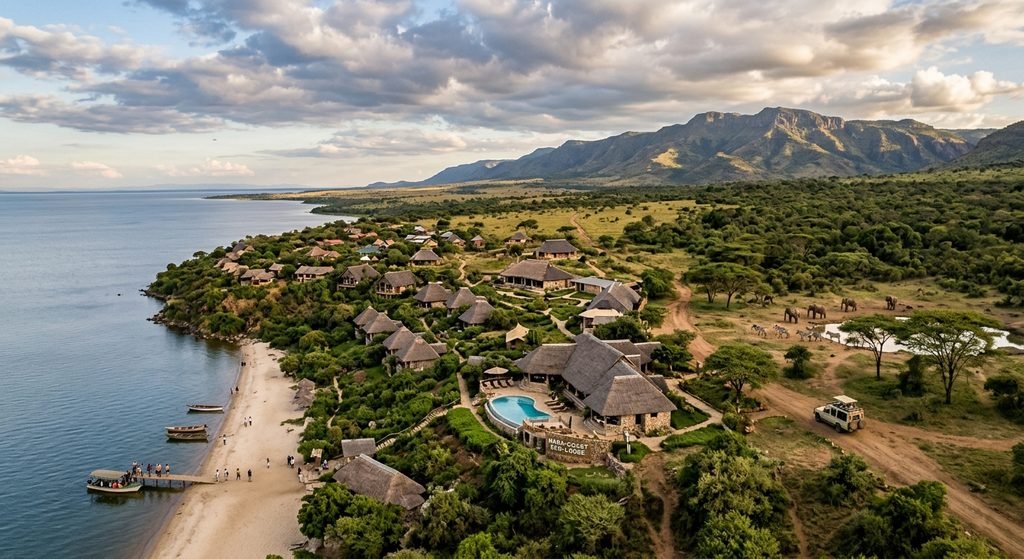
3. Five practical strategies for building more resilient African tourism destinations
1. Integrate climate risk into tourism planning
Climate risk should be considered in tourism investment, infrastructure, daily operations and destination development—not treated as a separate environmental issue.
A hotel located in a flood-prone area, for example, may need to review drainage, building design, emergency access and insurance arrangements. A lodge operating in a water-stressed destination may need to assess future water availability before expanding its accommodation capacity.
Tourism businesses can begin by:
- Identifying the climate hazards most relevant to their location.
- Reviewing how these hazards could affect buildings, staff, guests, suppliers and access routes.
- Incorporating climate considerations into refurbishment and investment decisions.
- Establishing emergency procedures and business continuity plans.
- Coordinating with local authorities and emergency services.
Destination managers can support these efforts by integrating climate information into land-use planning, infrastructure development and tourism strategies.
The Global Sustainable Tourism Council’s destination criteria provide a useful reference for structured destination management, including risk management and climate adaptation.
Reference: GSTC Destination Criteria.
The objective is not to predict every future event. It is to reduce avoidable exposure, prepare for foreseeable disruptions and improve the ability to respond when conditions change.
2. Protect the natural assets tourism depends on
Wildlife, forests, wetlands, coral reefs, coastlines and other ecosystems are central to many African tourism experiences.
They also support essential ecological functions. Wetlands can help regulate water flows, mangroves can reduce exposure to some coastal hazards, and healthy forests can contribute to watershed protection. The extent of these benefits depends on the ecosystem and local conditions.
When ecosystems deteriorate, the consequences can extend beyond biodiversity. They may affect visitor experiences, community livelihoods, water security and the long-term appeal of a destination.
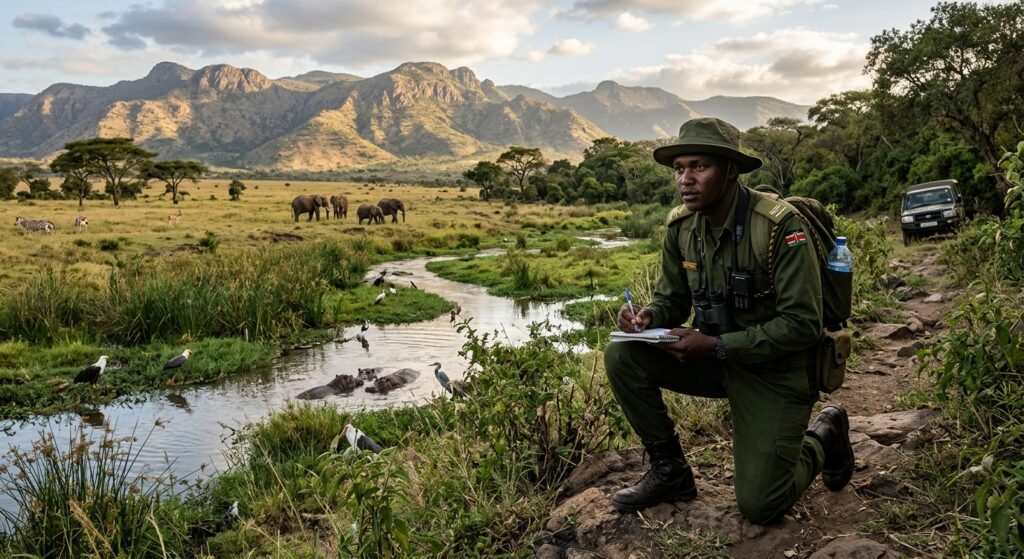
Tourism businesses can contribute to nature protection by:
- Supporting credible conservation and habitat restoration initiatives.
- Managing visitor activities in environmentally sensitive locations.
- Reducing pollution, waste and unnecessary resource consumption.
- Working with local communities and conservation organizations.
- Monitoring tourism-related environmental pressures.
However, tourism does not automatically deliver conservation benefits. Effective outcomes depend on appropriate governance, responsible visitor management, reliable financing and fair consideration of community rights and priorities.
For businesses whose products depend on nature, conservation should be viewed not only as a responsibility but also as part of protecting the long-term foundations of their operations.
3. Strengthen local supply chains and keep more value in the destination
A resilient destination needs more than visitor arrivals. It needs local businesses, skilled workers, reliable suppliers and economic relationships that can withstand disruption.
Hotels, restaurants, tour operators and attractions purchase food, furnishings, crafts, transport and many other goods and services. Their procurement decisions influence which businesses gain access to tourism markets and how much economic value circulates locally.
Where appropriate and feasible, relationships with local and regional suppliers can diversify supply options, create business opportunities and connect tourism with agriculture, culture and other sectors.
Practical actions include:
- Identifying qualified local suppliers and assessing their capacity.
- Establishing fair purchasing arrangements and realistic payment terms.
- Improving demand forecasting so suppliers can plan production.
- Supporting training and quality improvements where appropriate.
- Avoiding excessive dependence on a single supplier or source.
- Tracking the share of procurement expenditure going to local businesses.
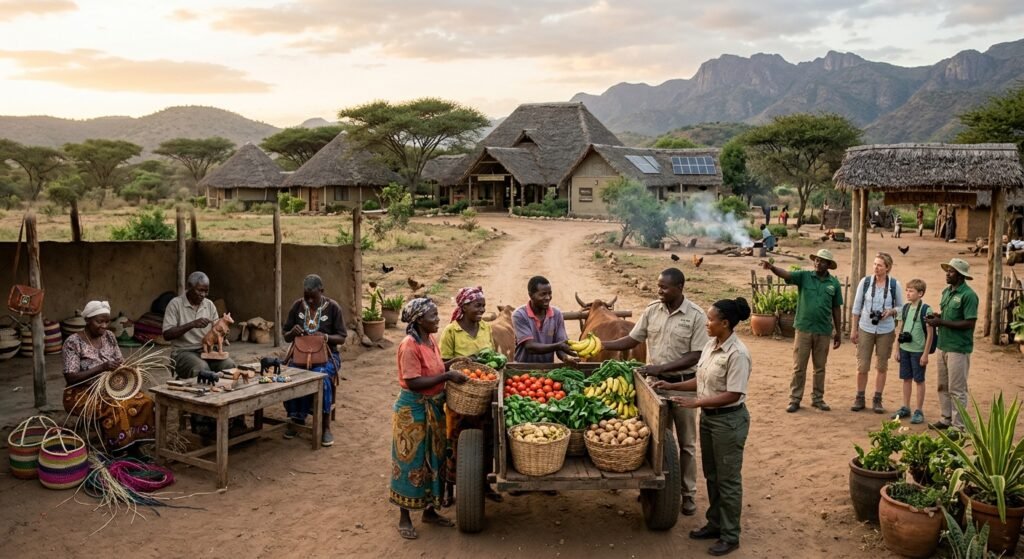
Namibia’s communal conservancy model offers one example of how tourism, conservation and community institutions can be connected. In some locations, community conservancies participate in tourism enterprises and joint-venture lodge arrangements, creating opportunities for income and employment.
The model’s outcomes vary, and communities may face challenges such as climate pressures, limited income diversification and uneven access to benefits.
Reference: Namibia Ministry of Environment, Forestry and Tourism.
The broader lesson is that local economic participation requires deliberate structures. Local sourcing and community partnerships are more likely to create lasting value when supported by fair terms, strong governance, market access and meaningful local decision-making.
4. Manage water, energy and other resources strategically
Resource management is both an environmental priority and a practical resilience measure.
Water shortages can disrupt guest services, food production, laundry and cleaning. Energy interruptions can affect refrigeration, communications, lighting and essential equipment. Rising resource costs can put pressure on operating margins.
Businesses can reduce exposure by understanding their consumption patterns and identifying their most important operational risks.
For water, practical actions may include leak detection, efficient fixtures, improved laundry practices, water-wise landscaping and safe water reuse where regulations and infrastructure allow.
For energy, businesses can review equipment efficiency, maintain systems, monitor consumption, assess renewable energy options and plan for backup power where appropriate.
Useful performance indicators include:
- Water consumption per guest-night.
- Energy consumption per guest-night.
- Share of energy supplied by renewable sources.
- Food waste generated per meal or guest cover.
- Waste generated and diverted from disposal.
- Frequency and duration of water or energy interruptions.
Measurements should be interpreted in context. Property type, occupancy, climate, service levels and local infrastructure can all influence performance.
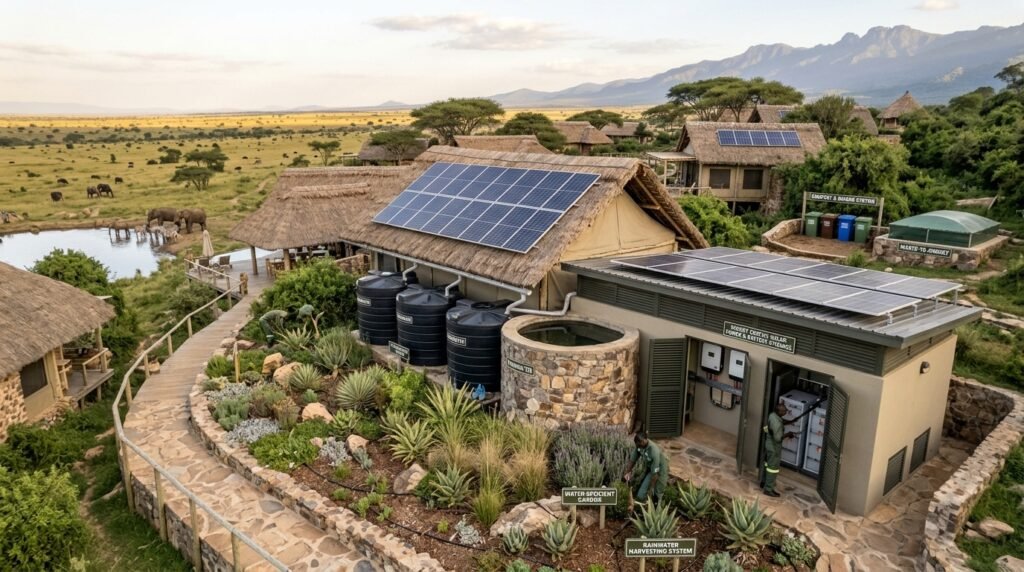
The aim is not simply to report lower consumption. It is to understand where resources are being used, identify risks and prioritize improvements that deliver meaningful environmental and operational benefits.
5. Diversify tourism products, markets and partnerships
Destinations that depend heavily on one product, season, visitor market or revenue stream can be particularly vulnerable when conditions change.
Diversification can create additional opportunities and reduce some forms of dependence. A destination known mainly for wildlife tourism, for example, might explore complementary cultural experiences, heritage routes, food tourism or community-led activities where there is genuine demand and local support.
Diversification must nevertheless reflect local assets, market demand, infrastructure and environmental limits. Adding new products without assessing their costs or impacts can create additional pressures rather than improve resilience.
Tourism businesses and destination managers can:
- Analyse dependence on particular visitor markets and seasons.
- Develop complementary experiences with local enterprises and communities.
- Improve digital visibility and access to suitable markets.
- Build partnerships across accommodation, transport, food, culture and conservation.
- Strengthen staff skills and cross-training.
- Coordinate emergency preparedness and business continuity planning.
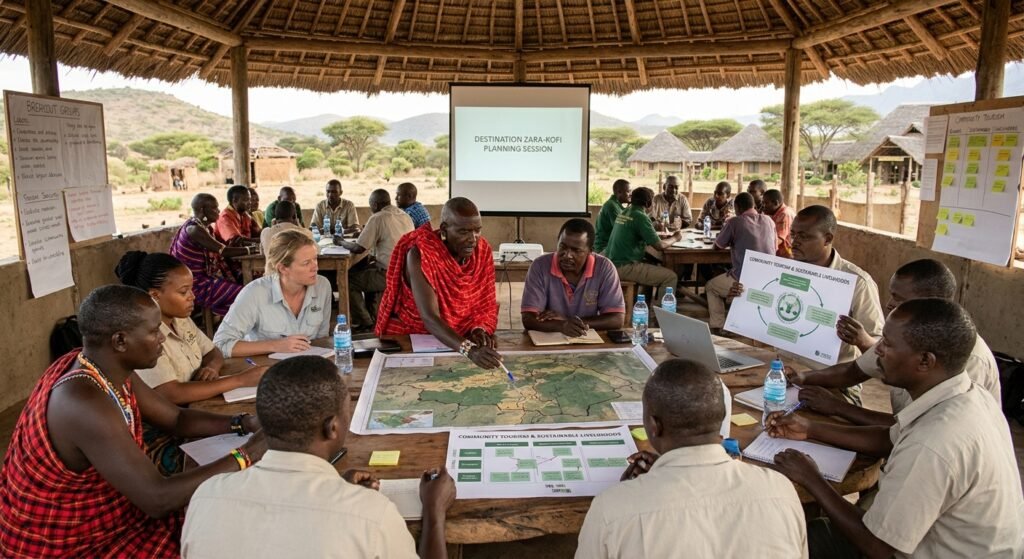
Partnerships are especially important because many destination risks extend beyond the control of individual businesses. Transport infrastructure, water security, conservation and emergency response often require cooperation between public authorities, private businesses and communities.
Resilience is therefore a shared responsibility—not a task that one hotel or tour operator can accomplish alone.
4. From good intentions to measurable progress
A destination cannot manage resilience effectively without understanding its starting point and tracking change over time.
Tourism businesses do not need to begin with an elaborate reporting system. They can start by identifying their most material risks, selecting a manageable number of indicators and assigning responsibility for monitoring them.
The following framework offers a practical starting point.
| Priority | Example indicator | First action |
|---|---|---|
| Climate risk | Key risks assessed and reviewed | Conduct a basic climate-risk assessment |
| Water security | Water use per guest-night | Establish a consumption baseline |
| Energy | Energy use per guest-night | Review bills and meter readings |
| Local economic value | Share of procurement spend with local suppliers | Map suppliers and purchasing expenditure |
| Nature protection | Environmental impacts monitored | Identify sensitive ecosystems and key pressures |
| Business continuity | Emergency plan reviewed and tested | Update procedures and brief staff |
| Community engagement | Regular stakeholder meetings | Establish a consultation process |
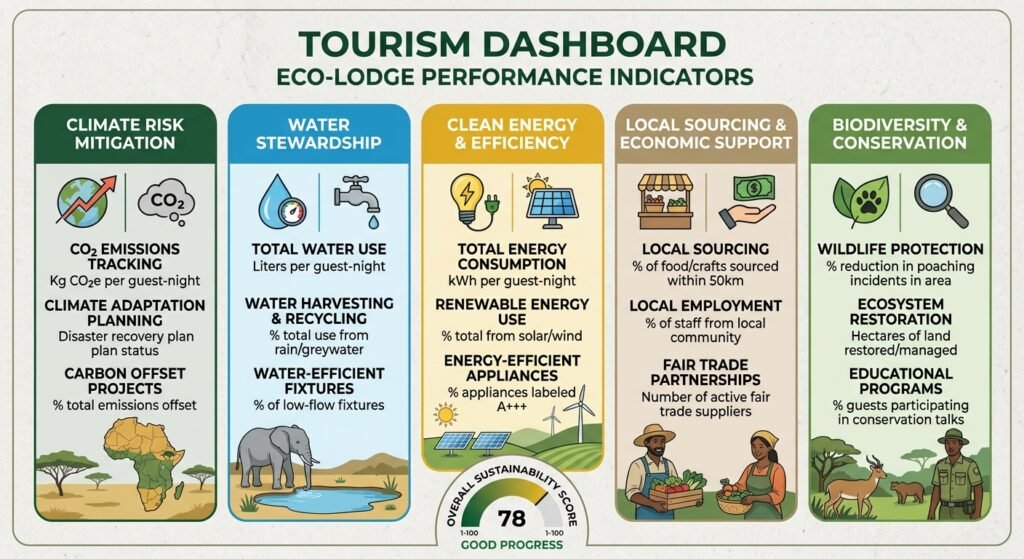
These are suggested management indicators, not universal performance benchmarks. Each business or destination should select measures suited to its size, location, risks and objectives.
Where possible, establish a baseline, set realistic targets, assign responsibilities and review results regularly. Reporting should explain what has improved, what remains challenging and what action will follow.
This approach helps turn sustainability commitments into practical management decisions. It also supports more credible sustainability communication by distinguishing measurable progress from unverified claims.
5. Everyone has a role in building resilient destinations
Destination resilience requires action across the tourism ecosystem.
Tourism businesses can improve operational efficiency, prepare for disruptions, strengthen supplier relationships and communicate sustainability performance honestly.
Destination managers and policymakers can integrate climate risks into planning, coordinate infrastructure and emergency preparedness, monitor tourism pressures and support inclusive economic development.
Communities and local enterprises should have meaningful opportunities to participate in decisions affecting their livelihoods, culture, land and natural resources.
Travellers can make informed choices by respecting local guidance, supporting responsible businesses, conserving resources and treating natural and cultural heritage with care.
No single group can deliver destination resilience alone. Progress depends on collaboration, reliable information, appropriate investment and clear accountability.
The most effective initiatives are those that respond to local priorities rather than simply replicate solutions from elsewhere. Global best practices can provide valuable guidance, but implementation must reflect the realities of each destination.
6. Building a more resilient future for African tourism
Africa’s tourism sector has significant opportunities to create employment, strengthen local enterprises, support cultural heritage and contribute to conservation. Realizing these opportunities over the long term requires more than attracting additional visitors.
It requires destinations that understand their risks, businesses that use resources responsibly, supply chains that create local opportunities, ecosystems that are protected and partnerships that support adaptation.
Resilience is not a one-time project, nor is it a guarantee that disruption will never occur. It is an ongoing process of preparation, learning, investment and improvement.
For African tourism businesses, a useful starting point is to ask three questions:
- What are the most significant risks to our business or destination?
- Which people, ecosystems and local economic relationships are essential to our long-term success?
- What measurable improvement can we begin this month?
The answers can help turn sustainability ambitions into practical action.
At OJIS Travels & Advisory, we believe the future of tourism depends not only on where people travel, but also on how destinations prepare, adapt and create lasting value.
African Perspective. Global Insights. Local Impact.
Join the conversation: What is one practical step your business or destination could take this month to become more resilient? Share your perspective and help advance the conversation on sustainable tourism in Africa.